
a love letter to wine
moscatos and mouthfeel and malolactic fermentation, oh my!

last saturday, i had wine for the first time. now if you /happen/ to have memories of me slapping the bag in college and/or downing a bottle of barefoot to pregame a movie night, no you don’t — you’re mistaken.
for my entire adult life until last saturday, i purposefully avoided taking wine seriously; partly because i didn’t want to seem pretentious (media makes this association easy) and partly because i was scared about becoming more picky if i developed my palette for it. this is no longer the case, and in the next 5 minutes, i’ll tell you what changed for me.
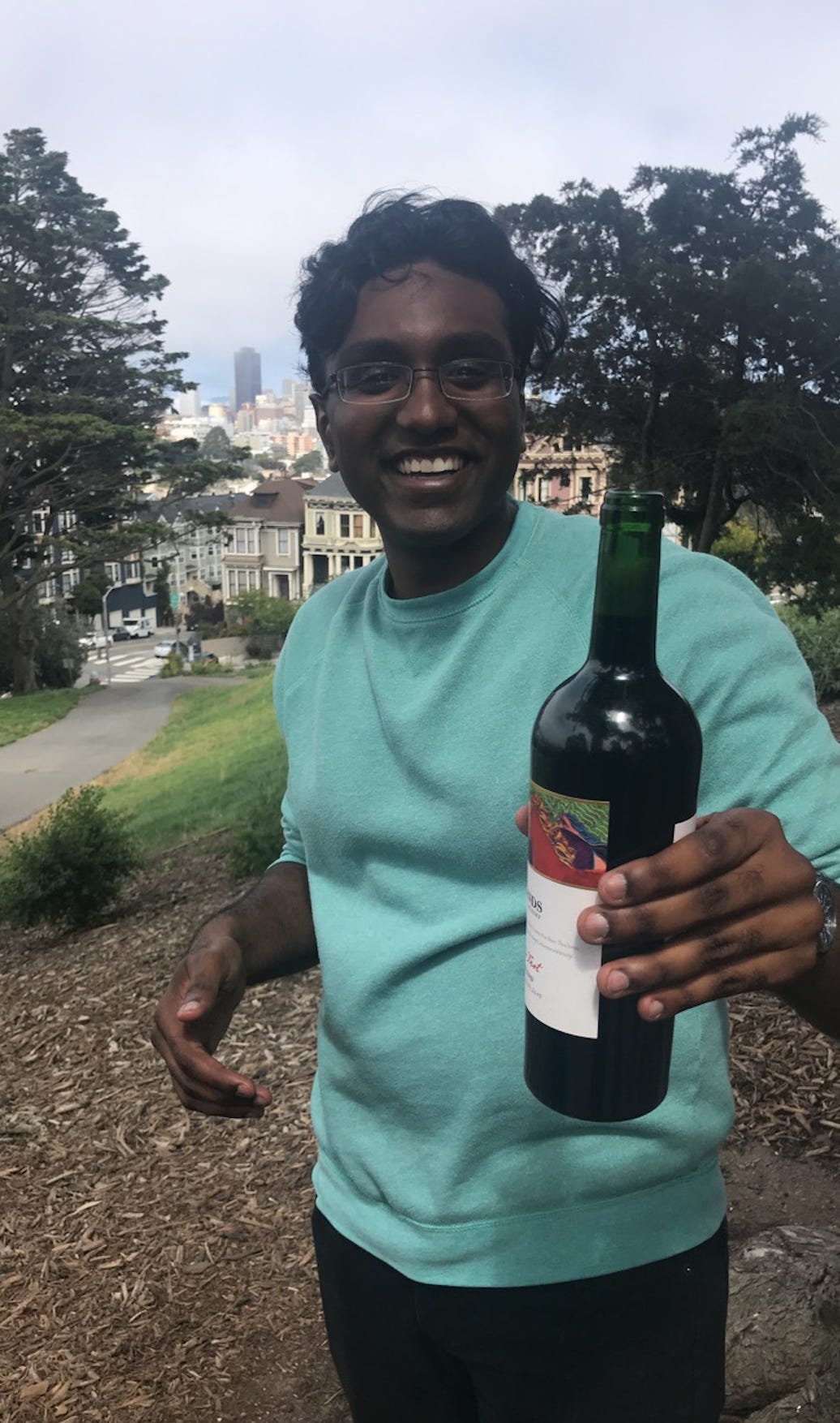
but before i tell you about last saturday, it’s important for me to tell you about last friday. i didn’t have any plans, so i took two edibles, went to the gym, and was having a great time until i got to that point (you may know it) where i was more focused on the layout of the floor tiles and the rotation of the ceiling fans than the exercise, so i decided i should probably leave. on the way home, i got distracted by the noise of Bay Grape, the wine shop right next to my house.
i went inside and somehow found myself in a 1:1 lecture from one of their employees, Iylah, about how to approach finding wine i like. she was talking for no less than (what felt like) four hours. eventually, she left to go talk to another customer. anyway, i went home and went to bed, and although i remember very little of the specifics of what Iylah said, what i do remember the next morning was the excitement in her voice as she was explaining all of the different axes of classification for wine. that wines can be sweeter or drier, they can be lighter or more full bodied, they can have smooth or spicy finishes, and on and on.
i woke up with all these words floating around my head and with a burst of energy, found and read The New Wine Rules by Jon Bonne. i highly recommend this book to all newcomers to wine. it was 150 pages long but i sped through it, highlighting the vocabulary i found important and what i felt were foundational pieces of information, like the fact that you only need two (or three) types of wine glasses, that wines are ruined by corks very rarely nowadays, what people mean when they say a wine is “natural” and more.
my favorite learning from The New Wine Rules was an introduction to the word “terroir” which the author translated from French as “somewhereness”; it’s this idea that Place matters. that it tells you a bit about the growers, and the grapes, and the history, and the climate, and the soil, and that “the Central Coast of California” encompasses hundreds of miles and so is unspecific and as i was reading this, i could literally feel my thirst growing. all these little differences that matter are just out there waiting to be recognized and seen and appreciated and i was and am so ready to embark on a journey of being impacted with this new world of potential experiences.
i finished the book around 2 PM, and i called half a dozen people in the east bay trying to find someone to go back to Bay Grape with me. i was even reaching out to people i hadn’t talked to in like six months (wine seems like a good way to reconnect). everyone was busy, so i went to the shop alone and sure enough, Iylah was there and said with a smile on her face. “you’re back!” and i was like, “hell yeah i’m back!”
the tasting flight of the week was “wines from Chile”. Iylah poured me the first glass (Mayu Pedro Ximenez 2020) and i took it, looked at it, smelled it, tasted it, and thought to myself “okay this is pretty good”.
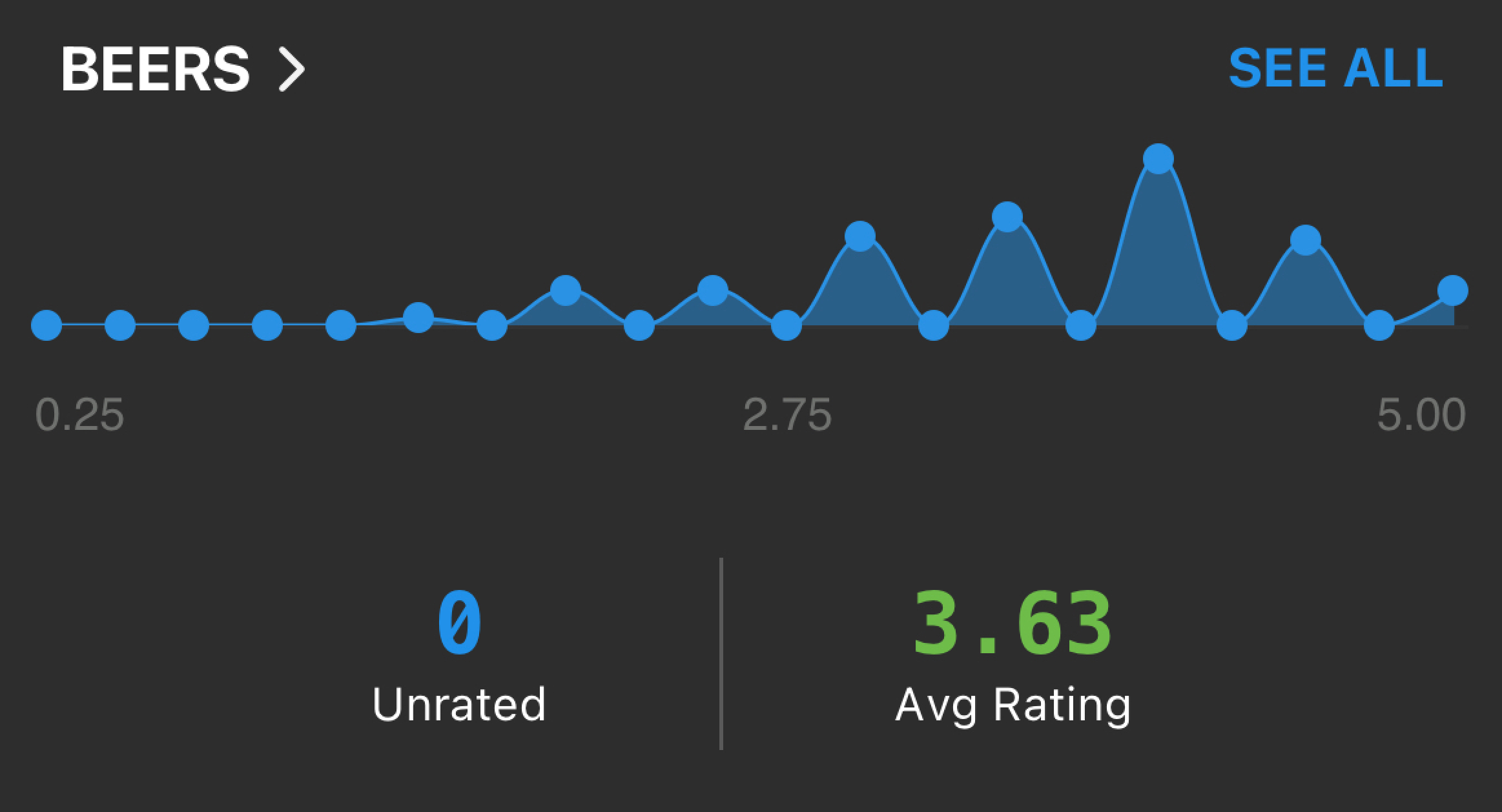
i had just downloaded Vivino (a wine rating app) and was prepared to start logging the wines i tried with a score from 0 to 5. but as i sat there after taking a sip of my first ever glass of wine, i had no idea what rating to give it. if this was a new beer, i’d be able to do it instantly. i’ve done it for over 500 different beers in the last 5 years. in fact, i’m so consistent in my ratings that i will forget that i’ve tried a beer, produce a rating, and then when checking my Untapped history, realize that i’ve given it that exact rating 3 years ago. you’d would think that my tastes as to what’s “good” changes, but it doesn’t really. i have no experience with wine. i know that the sip i just had was good, but this was my first sip ever! i didn’t know if it was 3.0 good or 4.5 good! i gave it a 4.5 and accepted to myself that it’ll likely take a couple dozens different wines at least before it comes more naturally.
this also made me realize that despite all the time i’ve spent learning about and exploring beer, i didn’t quite have an answer for WHY i was doing so. i was sent on on an existential spiral.
i’m gonna fast forward all the deep epiSTEMological (haha get it?) introspection i did while sipping that first glass of wine and give you the summary. i had four realizations about myself — the first two are foundational:
i like appreciating things
i like trying new things
at first i thought these were the answers to the question of “why did i care to learn about beer?” but then i realized that these two things are entirely non-unique to beer itself. so i looked a little deeper and realized that given those two things are such core parts of who i am, i’m going to keep trying and appreciating new beer regardless, but as i do so:
i want to be able to veto / deprioritize what i try
i want to be able to give recommendations to my friends
THESE are the things that i wanted to get out of my journey with beer and now want to get out of with wine. but with wine, i want one more thing:
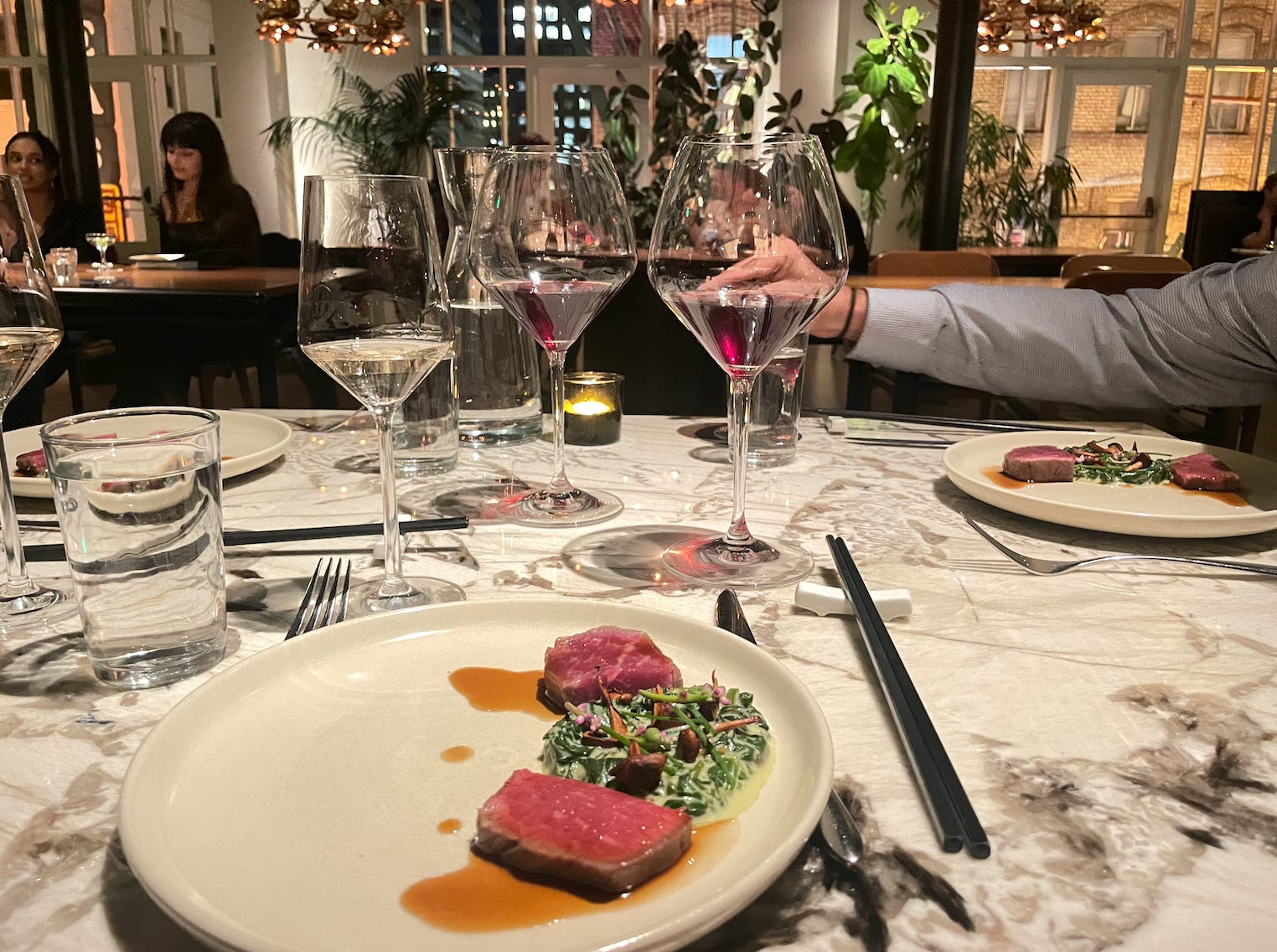
i want to pair wine with food
this is something that i don’t really care about with beer, but there’s so many expert sommeliers who work with restaurants to make really special pairings and i’d like to make a mental note to appreciate them more. as i’ve found over and over again, all it takes to appreciate something more is to decide you’re going to.
Iylah poured me the second glass (Vina Gonzalez Bastias Matorral 2019), and i liked this one too. i really liked how i felt like i could imagine eating the grape that the wine came from. with the first one—though i liked it better—i couldn’t do the same.
Iylah poured me the third glass (Vina Ventisquero Grey Carmenere 2019) and when i went to smell it, i immediately was taken aback. it smelled foul. like truly revolting. i took a sip, and sure enough, this wine was gross.
i was disgusted… and the most intrigued i’ve been the entire tasting. remember, the fun for me is also in learning what i DON’T like. so i asked Iylah for a piece of paper and a pen, and as i went in for my second sip, i took some notes. here’s what i didn’t like about it:
i didn’t like the smell, how it smelled peppery
i didn’t like how the first place the taste hit was at the back of my throat
i didn’t like how it dried out my mouth
i didn’t like the taste; specifically, the graphite minerality
this was so exciting! now i know more about myself! and now i have things to think about later. are there wines that i don’t like the smell of but do like the taste of? what are mineral notes i DO like? can i control where i feel the taste hit my mouth?
in the last week, i’ve found out that one of my friends likes peppery wine and another friend likes graphite notes; and at a wine bar this week, i was able to answer that first question—the Frederiksdal Sur Lie is a wine which smells terrible to me but tastes lovely!
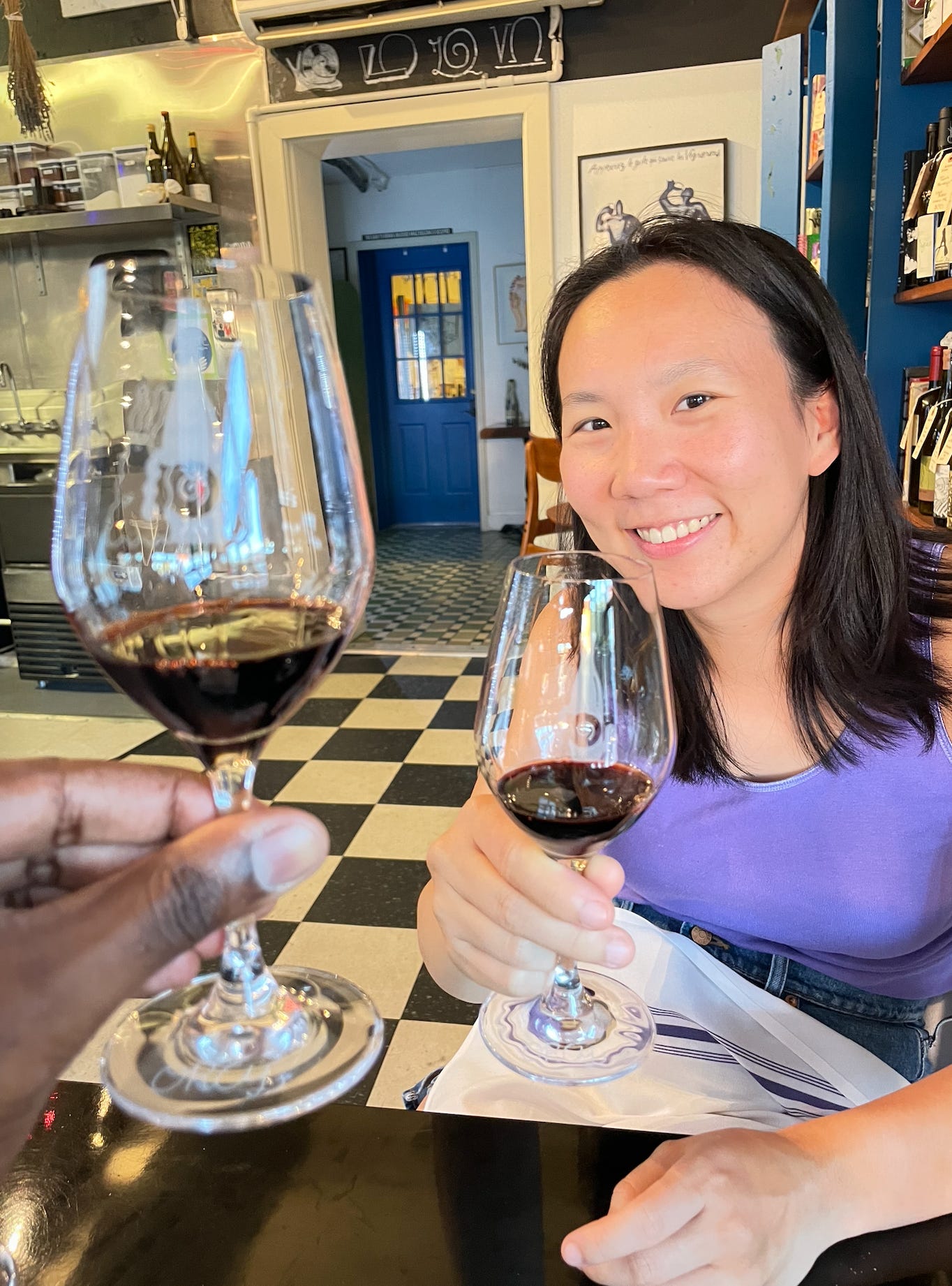
it’s over a week later, and the thing i keep coming back to is that concept of “terroir”; the idea that of course, wine is inextricably impacted by Place and surroundings, just are humans are. but it takes work and effort and time to figure out why and how. the ability to ask these questions and to find answers is something i’ve been finding a lot of joy in recently, and i’m excited to keep drinking and appreciating and if you’re reading this and would like to have some wine with me, please text me!